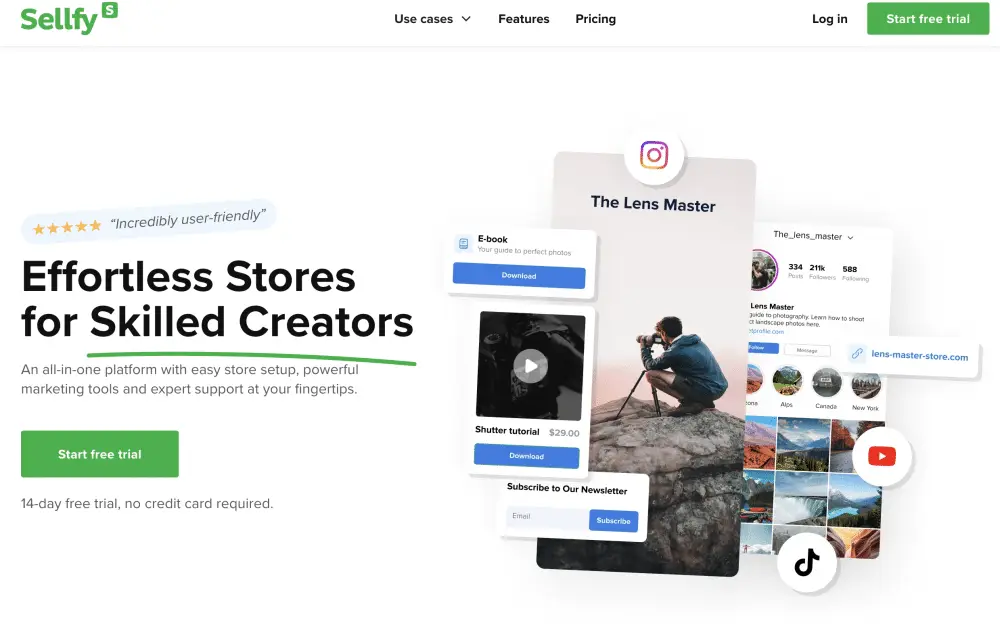
Sellfy, Stores for Influencers
Mastering Sellfy for Influencer Marketing Success in 2025
Sellfy is empowering creators to monetize digital products, merchandise, and subscriptions with ease.
This all-in-one platform bridges content creation and commerce, offering tools tailored for social media influencers seeking sustainable revenue beyond ad-based income.
With 30,000+ creators earning $142M+ annually, Sellfy simplifies direct-to-fan sales while prioritizing user-friendly design. Below, we dissect its features, ideal use cases, and strategic value.
1. Digital Product Sales: Core Monetization Engine
Feature: Sell ebooks, courses, presets, and downloadable content with automated delivery.
Use Case: Photographers sell Lightroom presets; fitness coaches monetize workout guides.
Target Audience: Influencers with niche expertise (1K–500K followers).
Pros:
- Instant file delivery post-purchase.
- DRM protection reduces piracy risks.
- Global reach with 135+ currency support.
Cons:
- Limited video hosting (10GB/file).
- Basic product page customization.
Stat: Top creators earn $100K+/month selling digital products on Sellfy.
2. Print-on-Demand Merchandise: Branded Physical Goods
Feature: Design and sell custom apparel, mugs, and accessories without inventory.
Use Case: Artists launch merch lines; podcasters offer branded merchandise.
Target Audience: Creators with strong visual identities.
Pros:
- Zero upfront costs; Sellfy handles production/shipping.
- Integrates with Printful for 200+ product options.
Cons:
- Lower margins compared to digital sales.
- Longer shipping times for international orders.
Stat: 40% of Sellfy users leverage print-on-demand for 30%+ revenue diversification.
3. Subscription Models: Recurring Revenue Streams
Feature: Offer tiered memberships for exclusive content or services.
Use Case: Educators provide premium courses; musicians share ad-free music.
Target Audience: Influencers with loyal, engaged audiences.
Pros:
- Auto-renewals reduce churn.
- Drip content to maintain engagement.
Cons:
- Requires weekly content updates.
- No native community forums.
Stat: Subscriptions drive 3x higher lifetime value than one-time purchases.
4. Built-In Marketing Tools: Boost Conversions
Feature: Email campaigns, discount codes, and upselling prompts.
Use Case: Launch limited-time offers; recover abandoned carts.
Target Audience: Data-driven creators optimizing ROI.
Pros:
- Abandoned cart emails boost conversions by 15%.
- Pre-designed email templates save time.
Cons:
- Limited email credits on entry-tier plans.
- No A/B testing for campaigns.
5. Analytics Dashboard: Track Performance
Feature: Monitor sales, traffic sources, and customer behavior.
Use Case: Identify top-selling products; refine pricing strategies.
Target Audience: Growth-focused influencers.
Pros:
- Real-time revenue tracking.
- Export customer emails for CRM integration.
Cons:
- No psychographic data (interests/values).
- Advanced metrics require manual analysis.
Why Sellfy Fits Modern Influencer Marketing Trends
The Influencer Marketing industry will hit $48B by 2026, with micro-influencers driving 60% of niche purchases.
Sellfy’s model aligns with creators prioritizing ownership and scalability, reducing reliance on volatile social algorithms.
Key Advantages:
- Control: Retain 100% ownership of content and customer data.
- Speed: Launch stores in <5 minutes.
- Versatility: Merge digital, physical, and subscription offerings.
Challenges:
- Fees: 5–20% platform cuts on lower-tier plans.
- Discovery: Relies on creator-led promotion vs. built-in traffic.
Sellfy vs. Competitors
| Feature | Sellfy | Shopify | Stan Store |
|---|---|---|---|
| Fees | 0–20% + payment processing | 2.9% + 30¢ per transaction | 5% + $1/month |
| Product Types | Digital, physical, subscriptions, POD | All products | Digital, courses |
| SEO Tools | Basic metadata optimization | Advanced SEO apps | Minimal |
| Ease of Use | Drag-and-drop simplicity | Steeper learning curve | Mobile-first design |
Verdict: Sellfy excels for multi-product creators; Shopify suits large inventories.
Optimizing Sellfy for Maximum Impact
- Bundle Products: Pair $50 courses with $20 presets for 40% higher average order value.
- Leverage SEO: Use “Sellfy” and “Influencer Marketing” in product titles/descriptions.
- Promote Cross-Platform: Embed store links in Instagram bios and YouTube descriptions.
- Offer Freebies: Share free templates to grow email lists (70% conversion uplift).
Stat: Creators using Sellfy’s email marketing see 25% higher retention rates.
Ethical Considerations
- Transparency: Disclose affiliate links per FTC guidelines.
- Authenticity: Promote only products aligning with audience values.
- Data Security: Encrypt customer payments via Stripe/PayPal.
The Future of Sellfy in Influencer Marketing
2025 updates include AI-generated product descriptions and TikTok Shop integrations.
Expect enhanced video hosting and NFT-gated content for Web3-curious creators.
Final Take:
Sellfy remains indispensable for influencers blending Influencer Marketing with direct monetization.
While customization limits exist, its simplicity and versatility cater to creators at all growth stages.
By mastering digital sales, merch, and subscriptions, influencers transform followers into loyal patrons.
Pro Tip:
Use Sellfy’s “Pay What You Want” option—creators report 50% higher conversion rates for niche audiences.
In 2025’s creator economy, Sellfy is the bridge between passion and profit.